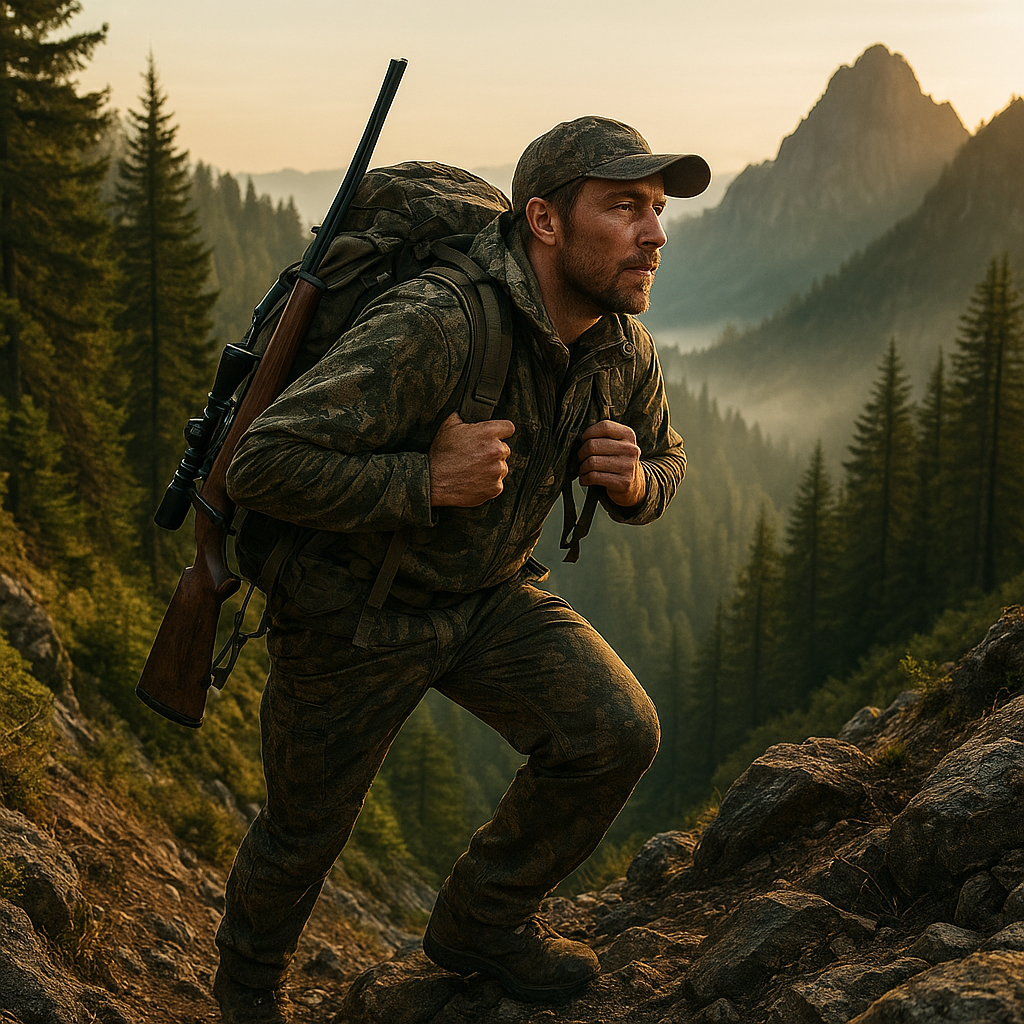
Backcountry hunting is not a casual weekend hobby. It demands everything from you — your patience, your navigation skills, your mental resilience, and perhaps most critically, your physical fitness. Whether you’re chasing elk through steep Rocky Mountain terrain, stalking mule deer across canyon country, or packing out a bull moose several miles from the nearest trail, your body is your most important piece of equipment. No rifle, no optic, no high-tech boot can compensate for lungs that give out halfway up a ridge or legs that buckle under the weight of a loaded pack.
Yet fitness remains one of the most overlooked aspects of hunt preparation. Hunters spend months researching units, scouting on OnX, and obsessing over gear lists — only to show up physically underprepared for the demands of the backcountry. The result is not just a miserable experience; it can be genuinely dangerous. This article breaks down exactly why physical fitness is non-negotiable for backcountry hunting, what a sensible training approach looks like, and how getting fit actually deepens your connection to the hunt itself.
The Unforgiving Reality of Backcountry Terrain
Backcountry hunting takes place in environments that are genuinely hostile to human comfort. You’re operating at altitude, often above 8,000 feet, where the air is thinner and every step costs more energy than it would at sea level. You’re carrying a pack that might weigh 50 to 80 pounds — or considerably more on the pack-out. You’re moving over uneven ground, crossing streams, navigating deadfall, and doing all of this in variable weather conditions that can shift from warm sunshine to driving snow within a matter of hours.
According to research on occupational physical demands, carrying loads exceeding 30% of body weight over uneven terrain significantly increases the metabolic cost of movement and places enormous strain on the knees, hips, and lower back. Most backcountry hunters exceed this threshold routinely. A modest elk camp setup alone — shelter, sleeping system, food, water, optics, and rifle — can easily push 60 pounds before you’ve harvested anything.
The physical toll is cumulative, too. It’s not just one hard day. Backcountry hunts often run five to ten days or longer. Each morning you wake up sore, sleep-deprived, and facing another full day of demanding movement. Hunters who haven’t trained for this kind of sustained effort tend to make poor decisions — they cut corners, take risks on sketchy terrain, or push themselves into injury. Fitness is what gives you the margin to hunt safely and effectively across the full duration of your trip.
How Fitness Directly Affects Hunting Success
Beyond survival and safety, fitness has a direct and measurable impact on whether you fill your tag. Here’s the simple logic: animals in the backcountry live where it’s hard to get to. The hunters who consistently access the best terrain — the high basins, the remote drainages, the north-facing slopes where big bulls bed — are the ones who have the physical capacity to go there. Choosing the right animals to pursue also plays a role in how demanding your hunt will be, since some species push you into far more punishing terrain than others.
A fitter hunter can cover more ground, glass more country, and reposition quickly when an opportunity presents itself. If a bull bugle erupts half a mile away and 800 feet above you, a fit hunter can make that move. An unfit hunter watches the opportunity disappear. It really is that straightforward.
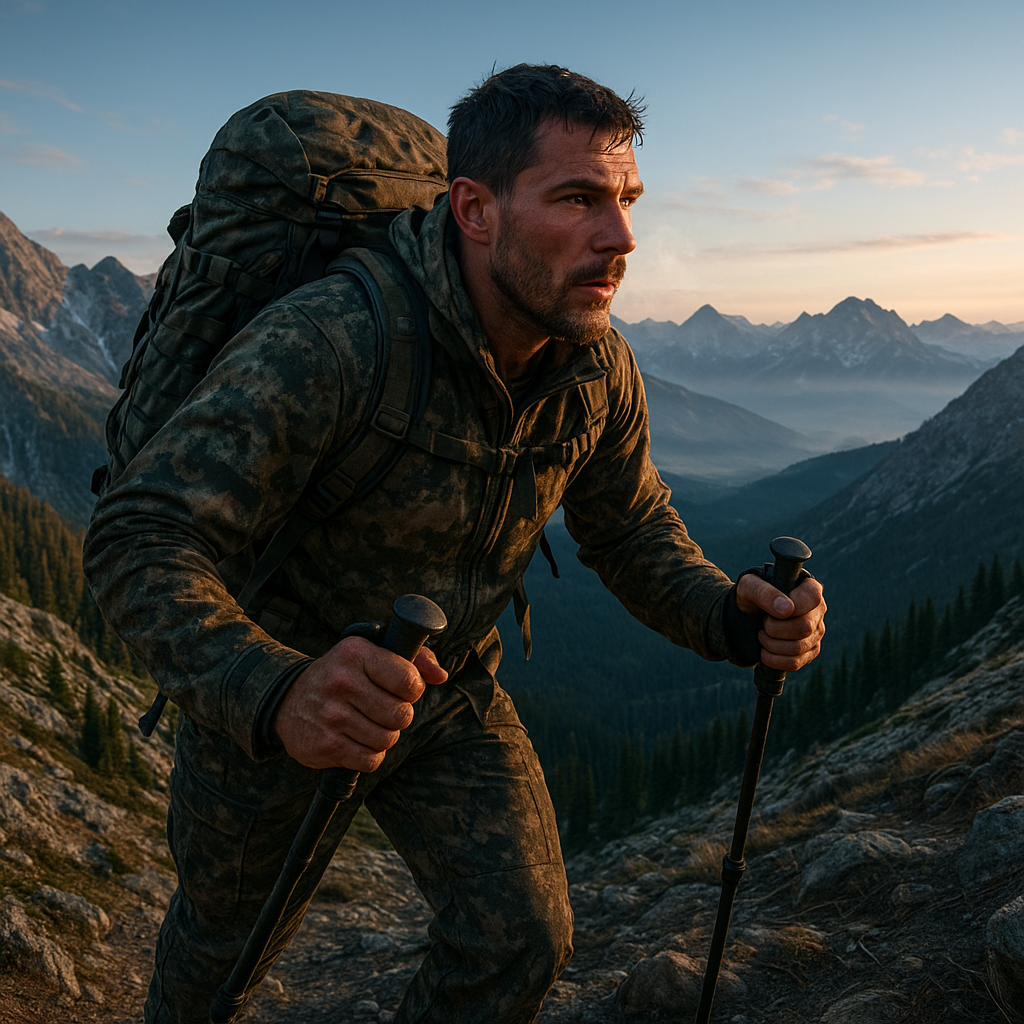
Fitness also affects your shooting. Elevated heart rate and muscle fatigue degrade accuracy. If you’ve just dragged yourself up a gruelling climb and you’re gasping for air when a shot opportunity appears, you’re going to struggle to settle the crosshairs. Training your cardiovascular system to recover quickly — so your heart rate drops from 160 to 90 within two or three minutes of stopping — can be the difference between a clean shot and a miss or, worse, a wounding.
The Mental Edge That Comes With Physical Preparation
There’s a psychological dimension to fitness that often goes unacknowledged. When you’ve spent months training for a hunt, you arrive in the field with confidence. You know what your body can do. You’ve already pushed through discomfort in training, so the discomfort of the hunt feels familiar rather than alarming. You’re less likely to bail early, less likely to feel overwhelmed, and more likely to stay in the game when conditions get hard — which in the backcountry, they always do.
What a Good Fitness Plan for Hunting Actually Looks Like
Many hunters ask: what is a good fitness plan for hunting? The honest answer is that it depends on your current fitness level, how much time you have before your hunt, and the specific demands of your terrain. However, there are core principles that apply almost universally to backcountry hunting preparation.
Start Early — Months, Not Weeks
The single biggest mistake hunters make is waiting too long. Getting in shape for a backcountry hunt takes months of consistent work, not a few frantic weeks of last-minute training. Ideally, you want to begin a structured programme at least four to six months before your hunt. This gives your body time to adapt gradually, reduces injury risk, and allows you to build genuine fitness rather than just fatigue yourself before you even leave home.
Prioritise These Four Fitness Components
- Cardiovascular endurance: The foundation of backcountry fitness. Zone 2 cardio — sustained, moderate-intensity effort where you can hold a conversation — builds the aerobic base that sustains you across long days. Hiking, rucking, cycling, and rowing are all excellent tools.
- Muscular strength and endurance: Particularly in the legs, glutes, core, and back. Squats, lunges, step-ups, deadlifts, and loaded carries build the strength needed to move efficiently under a heavy pack.
- Load-bearing capacity: Rucking — walking with a weighted pack — is arguably the most specific training you can do for backcountry hunting. It conditions your body to the exact stress it will face in the field.
- Stability and mobility: Uneven terrain demands ankle stability, hip mobility, and single-leg balance. Incorporating exercises like single-leg Romanian deadlifts, lateral band walks, and regular mobility work reduces injury risk significantly.
A Simple Weekly Structure to Build From
A balanced weekly approach might look something like this: two to three days of strength training focused on lower body and core, two days of zone 2 cardio (45 to 90 minutes each), one day of rucking with a progressively heavier pack over progressively longer distances, and one full rest or active recovery day. This isn’t a rigid prescription — it’s a framework to adapt based on your schedule and recovery capacity.
Understanding the 3-3-3 Rule and How It Applies to Training
The 3-3-3 rule in the gym refers to a progressive loading principle: performing three sets of three repetitions with near-maximal weight to build raw strength. While this approach has its merits for powerlifters, it’s not the primary model for hunting fitness. Backcountry hunters benefit more from higher-rep, endurance-oriented strength work combined with aerobic conditioning — the goal is not to lift the heaviest possible weight once, but to perform sustained, moderate effort for hours at a time. That said, building a base of genuine strength through compound movements is important, and structured progression in your strength training — whether you use a 3×3, 5×5, or 3×10 scheme — will support your rucking and hiking capacity significantly.
The Four C’s of Hunting and the Role Fitness Plays
The four C’s of hunting — Careful, Considerate, Capable, and Compliant — represent the core principles of ethical and responsible hunting. Fitness speaks directly to the “Capable” element. A capable hunter has the physical and mental skills to pursue game humanely, pack out meat properly, and navigate challenging environments without creating safety risks for themselves or others. Being physically unfit in the backcountry doesn’t just affect your hunt — it can place search and rescue teams in danger and reflect poorly on the broader hunting community. Capability, in its fullest sense, begins with being fit enough for the demands you’re placing on yourself.

Health Benefits Beyond the Hunt
It’s worth noting that training for a backcountry hunt tends to produce wide-ranging health benefits that extend well beyond the field. Sustained cardiovascular training improves heart health, reduces blood pressure, and supports metabolic function. Strength training maintains bone density and joint health. The mental discipline built through consistent training — showing up, doing the work, tolerating discomfort — carries over into every other area of life.
There’s also an interesting physiological dimension to hunting itself. Research has suggested that hunting and intense physical activity in natural environments is associated with elevated testosterone levels, linked to the competitive, goal-directed nature of the pursuit combined with the physical demands of the activity. Whether or not that particular data point motivates you, the broader picture is clear: the physical and mental benefits of outdoor activity are well documented, and backcountry hunting pursued with genuine physical preparation is genuinely good for your health.
Common Mistakes to Avoid in Hunt Preparation
- Neglecting the pack: Running and cycling are great, but nothing prepares you for carrying a heavy pack like actually carrying a heavy pack. Get your boots and your pack on and start rucking.
- Ignoring elevation: If your hunt takes place above 9,000 feet and you live at sea level, plan to arrive a few days early to acclimatise. Altitude affects everyone, regardless of fitness level.
- Training without rest: More is not always better. Recovery is when adaptation actually happens. Overtraining in the weeks before your hunt will leave you depleted rather than prepared.
- Skipping the feet: Foot conditioning is often overlooked. Break in your boots thoroughly, address any hot spots early, and don’t underestimate how much foot and ankle health matters over multiple consecutive days of hard hiking.
- Starting too late: A month of hard training before a demanding hunt does very little. Consistency over months is what builds real capacity.
Conclusion
Backcountry hunting is one of the most physically demanding things a person can voluntarily choose to do. The terrain is unforgiving, the loads are heavy, the days are long, and the environment offers no concessions for those who show up underprepared. Physical fitness is not a nice-to-have for this pursuit — it is a foundational requirement, both for your safety and for your genuine enjoyment of the experience.
The good news is that the training itself, done consistently over months, is deeply rewarding. Every hill you climb in preparation, every ruck you complete, every early morning session you don’t skip — it all compounds into something real. You arrive at the trailhead knowing you’ve earned the right to be there. That confidence, combined with genuine physical capacity, changes how you hunt. You go further, stay longer, make better decisions, and appreciate the landscape in a way that’s simply not possible when you’re suffering through every step.
Start early, train specifically, be patient with the process, and let your fitness be the one piece of kit you never have to question when you’re deep in the mountains.