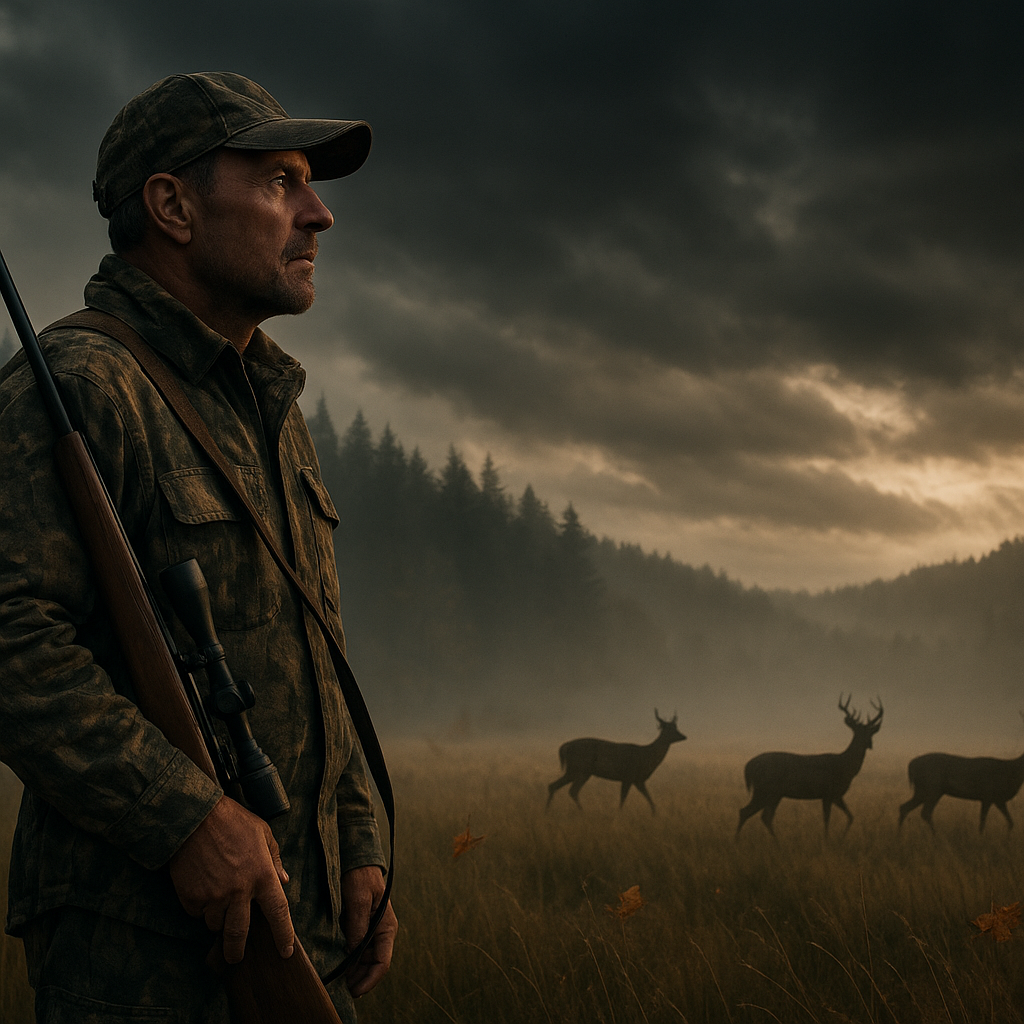
There’s a reason experienced hunters talk about the weather almost as much as they talk about the animals they’re pursuing. Barometric pressure, wind direction, temperature swings, incoming fronts — these aren’t just small talk at the trailhead. They’re the invisible forces that dictate where game will be, when they’ll move, and how predictably you can intercept them. Understanding the relationship between weather patterns and game movement isn’t just useful knowledge — it’s often the difference between a successful hunt and a long, quiet walk home empty-handed.
Whether you’re after whitetail deer, elk, wild turkey, or upland birds, weather plays a profound role in animal behaviour. The good news is that nature follows patterns, and once you start recognising those patterns, you can begin to hunt smarter rather than harder.
Why Animals Respond So Strongly to Weather Changes
Animals are tuned into their environment in ways that humans simply aren’t. They don’t have weather apps or barometers on the wall, but their bodies sense changes in atmospheric pressure, temperature, and humidity with remarkable sensitivity. This isn’t instinct in the casual sense — it’s survival. Moving at the wrong time, in the wrong conditions, can mean exposure to predators, wasted energy, or missed feeding opportunities.
The key driver behind much of this behaviour is barometric pressure. When pressure drops, it typically signals an incoming storm. Animals often respond by increasing feeding activity before the bad weather arrives, stocking up on calories in anticipation of hunkering down. When pressure rises after a storm, there’s frequently a burst of movement as animals emerge to feed again. That window — just before a front moves in and just after it passes — is often when game is most active and most visible.
The Role of Barometric Pressure in Animal Activity
Studies of whitetail deer behaviour have shown that deer are significantly more active when barometric pressure sits between 29.90 and 30.30 inches of mercury. Below that range, as pressure drops ahead of a storm, you’ll often see a last-minute flurry of activity. Above it, during stable high-pressure systems, deer tend to move more freely throughout the day, particularly in cooler months.
Elk and mule deer follow similar patterns. Big game hunters who keep a detailed journal of weather conditions alongside their observations often find strong correlations between pressure readings and the timing of animal movement within a season.
Temperature and Seasonal Game Movement
Temperature is perhaps the most intuitive weather variable for hunters to work with. Most big game animals are most comfortable in cooler temperatures, and their behaviour shifts noticeably as the thermometer changes.
Cold Fronts and Increased Movement
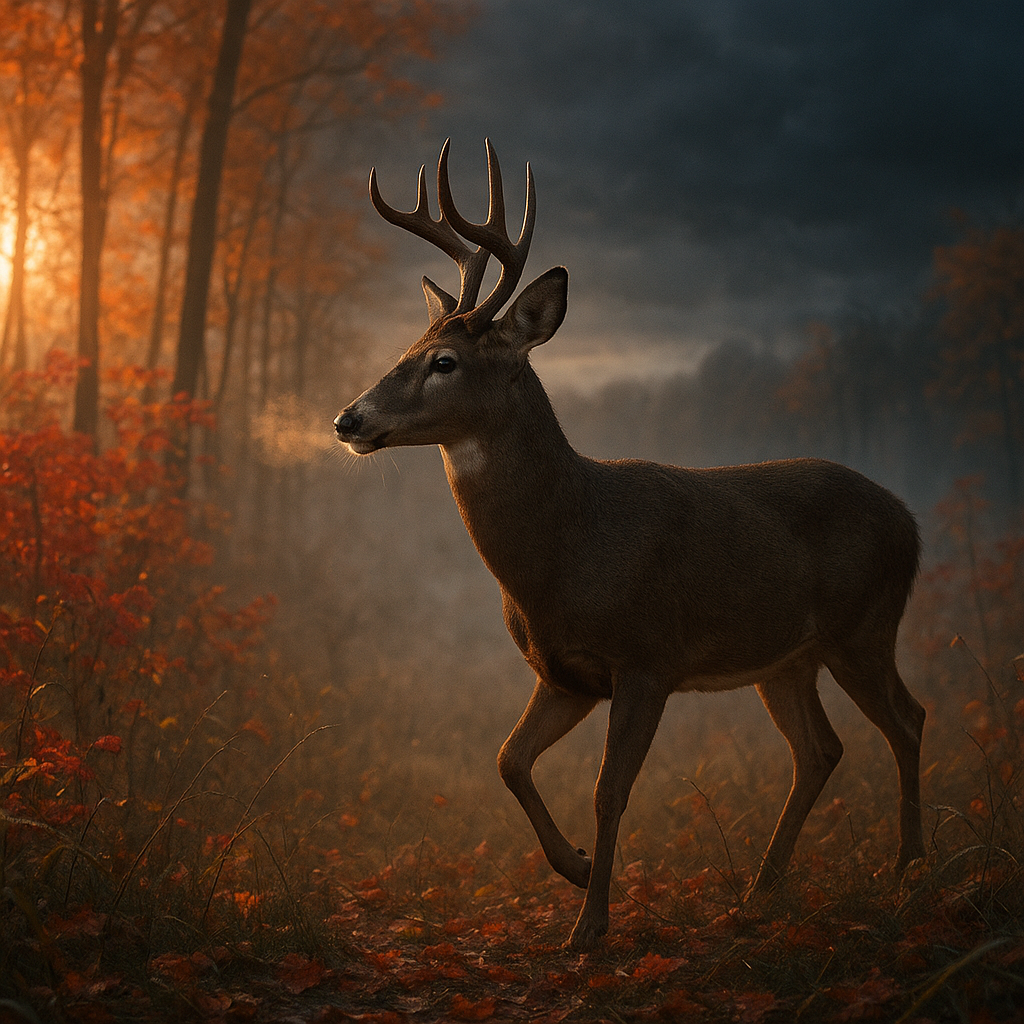
Cold fronts are one of the most reliable triggers for increased deer activity, particularly during the rut. As temperatures drop sharply, whitetail bucks in particular become almost reckless in their movement, covering large amounts of ground in search of does. This is the moment hunters wait for all season — and it’s no coincidence that some of the biggest bucks are taken in the first 24 to 48 hours after a cold front sweeps through.
The logic behind this is straightforward: cool temperatures make physical exertion more comfortable, reduce the animal’s scent cone (making them feel less vulnerable), and coincide with the biological triggers of breeding season. For hunters planning their outings around these conditions, keeping a close eye on approaching cold fronts in the extended forecast is absolutely worth the effort.
Heat and Its Suppressive Effect on Movement
On the other end of the spectrum, heat suppresses movement dramatically. During warm spells — whether in early archery season or during an unseasonably mild autumn — deer and most other big game retreat into thick cover during daylight hours, moving almost exclusively at night. Trying to pattern deer during a heat wave is frustrating precisely because their behaviour becomes so nocturnal.
In these conditions, focusing on water sources becomes a more productive strategy. Animals still need to drink, and water holes, streams, and ponds become natural funnels when heat forces animals to seek hydration more frequently.
Wind Direction and Scent Management
Wind is the variable that hunters arguably think about the most — and for good reason. Game animals rely on their sense of smell above almost all other senses to detect danger. A whitetail deer’s nose is estimated to be around 1,000 times more sensitive than a human’s. No amount of skill or patience matters if the wind is carrying your scent directly to the animal you’re hunting.
But beyond scent management, wind direction also influences where animals choose to bed and feed. Deer, elk, and most big game tend to bed with the wind at their backs so they can smell danger approaching from behind, while using their eyes to watch the terrain in front of them. Understanding this allows hunters to approach from angles that minimise both visual and olfactory detection.
High Winds and Reduced Game Activity
Strong, sustained winds — typically anything above 15 to 20 mph — tend to push animals into heavy cover and reduce movement significantly. There are a few reasons for this. First, high winds mask sound, which makes animals nervous because they can’t hear predators approaching. Second, constant movement of branches and vegetation makes it harder for animals to visually detect threats at distance. Finally, thermal currents become unpredictable in high winds, making scent detection unreliable for the animals themselves.
If you’re hunting in consistently windy conditions, focus on sheltered valleys, the lee sides of ridges, and dense thickets where animals feel more secure. These spots become reliable sanctuaries when the wind picks up.
Rain, Snow, and Overcast Conditions
Contrary to what some hunters assume, light rain is often an excellent time to be in the field. Rainfall softens leaves and debris underfoot, making quiet movement much easier. It also depresses scent dispersal, which works in the hunter’s favour. Animals don’t necessarily stop moving in light rain — they simply become easier to approach undetected.
Heavy, sustained rainfall is a different matter. Most game will shelter in place during downpours, and hunting pressure and animal movement both drop significantly. The real opportunity, again, comes in the period immediately following heavy rain — when animals emerge to feed and move freely.
Snow and the Hunter’s Advantage
A fresh snowfall is a gift to the observant hunter. Tracks become instantly readable, feeding patterns become visible, and travel routes that were previously invisible in bare ground conditions suddenly stand out clearly. Snow also muffles footsteps, allowing for quieter stalks, and it tends to drop temperatures in a way that can trigger increased animal activity.
One important note: hunting immediately after a heavy snowfall can be surprisingly slow, as animals often wait for conditions to settle before emerging. The best action typically comes 12 to 24 hours after the snow stops falling, once deer and other game have resumed their feeding routines.
How Weather Patterns Impact Life in the Wild More Broadly
It’s worth stepping back to appreciate just how comprehensively weather shapes wildlife behaviour across all species and seasons. Migratory birds follow pressure systems and wind patterns across entire continents. Waterfowl hunters know that the first significant cold snap of the year pushes ducks and geese southward in predictable waves. Upland bird hunters understand that pheasants and grouse hold tighter in cold, calm conditions — making dogs and hunters more effective — while scattering in warm, breezy weather.
Fish, too, respond dramatically to weather. Anglers track barometric pressure changes with the same dedication as deer hunters, knowing that feeding activity often surges just before a front arrives and slows in the days following a major pressure change.
The broader point is this: weather isn’t just a backdrop to wildlife — it’s an active participant in every aspect of animal behaviour, from feeding and breeding to travel and rest. Hunters who understand this relationship don’t just get lucky. They put themselves in the right place at the right time, repeatedly, because they’ve learned to read the sky as carefully as they read the land. If you’re still building out your overall approach, it’s also worth thinking carefully about which game species to pursue, since weather affects each one differently.
Practical Tips for Using Weather to Hunt More Effectively
- Keep a hunting journal: Record weather conditions — temperature, wind speed and direction, barometric pressure, sky conditions — alongside your observations of animal activity. Over time, patterns will emerge that are specific to your hunting area.
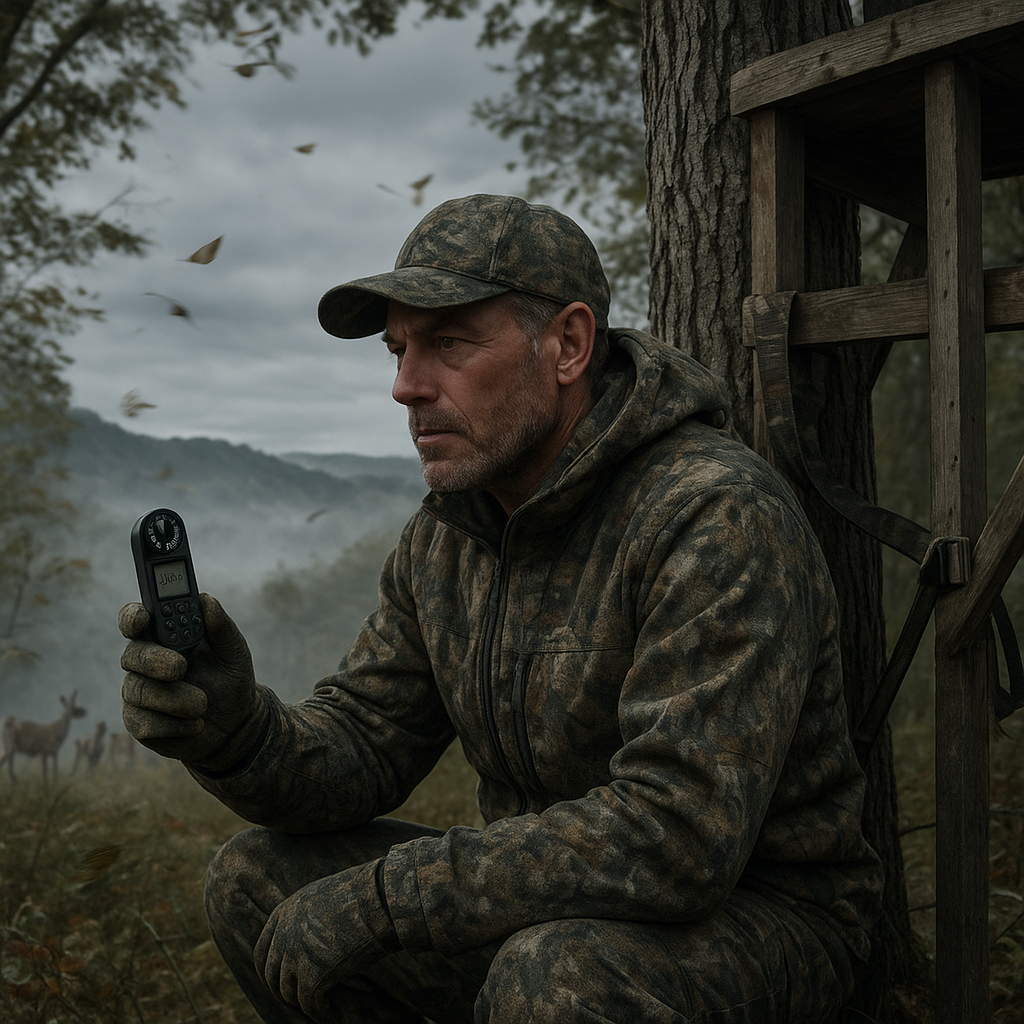
- Invest in a quality barometer: Many hunting watches and apps now include barometric pressure readings. Use them. Tracking pressure trends over 24 to 48 hours is often more useful than a single reading.
- Plan around fronts: Build your hunting schedule around incoming and passing weather fronts rather than fixed dates. The two days before a cold front and the first day after it passes are consistently productive.
- Prioritise wind over everything: No other variable will ruin a hunt faster than ignoring wind direction. Always position yourself downwind of where you expect animals to be, and don’t be afraid to abandon a stand location if the wind shifts.
- Use weather apps strategically: Apps that provide hourly forecasts, wind direction, and pressure trend data are invaluable for planning specific stand times rather than guessing.
- Adapt to conditions on the day: Be willing to change your plan based on what the morning conditions actually are, not what you hoped they’d be the night before. Being caught off guard in the field also underscores the value of core wilderness survival skills every hunter should carry into remote terrain.
Conclusion
Weather and game movement are inextricably linked, and understanding that relationship transforms the way a hunter approaches the field. From the pressure drop before a storm that sends deer scrambling to feed, to the calm, cold morning after a front passes when elk are bugling across a frost-covered meadow — nature is constantly signalling what’s about to happen next. Learning to read those signals, track the patterns, and position yourself accordingly is one of the most rewarding skills a hunter can develop. The animals are always responding to their environment. The question is whether you’re paying close enough attention to respond alongside them.